Best Supplements for Gut Health a Science-Backed Guide

The best gut health supplements are often a smart combination of probiotics, prebiotics, and digestive enzymes, all working together to bring your gut microbiome back into balance. Think of them as a team dedicated to improving your digestion, cutting down on bloating, and supporting your wellness from the inside out.
Your Journey to a Balanced Gut Starts Here
Imagine your gut microbiome as a lush, internal garden. It's a complex and vibrant ecosystem filled with trillions of bacteria, fungi, and other tiny organisms living in your digestive tract. When this garden is thriving and full of diverse, beneficial life, it has a profound impact on your overall health.
A well-tended gut supports everything from how you absorb nutrients to your immune response, and even your mood and mental clarity. But modern life can easily throw this delicate balance off.
Things like chronic stress, a diet heavy on processed foods, certain medications, and even just not getting enough sleep can act like weeds in your garden. They allow the less helpful microbes to take over, which often leads to common digestive complaints like bloating, gas, and general discomfort. Over time, this imbalance can contribute to bigger health issues that go far beyond your gut.
Why Gut Health Is Finally Getting the Attention It Deserves
The idea that our gut is foundational to our well-being is no longer a niche concept—it’s a global movement. You can see this shift just by looking at the market. The worldwide demand for gut health supplements is expected to skyrocket from USD 14,432.0 million in 2025 to an incredible USD 32,390.0 million by 2035.
This massive growth, tracked by industry analysts like Future Market Insights, points to one clear trend: people everywhere are realizing that a healthy gut is a cornerstone of a vibrant life.
This guide is your practical roadmap. We’ll break down the key players that help restore order to your internal garden, giving you the confidence and knowledge to choose the best supplements for your unique needs.
Your digestive system isn't just a food processor; it's the command center for your entire body. Nurturing it with the right support is one of the most powerful steps you can take for your long-term health and daily vitality.
Quick Guide to Key Gut Health Supplements
Before we dive deep, let's get acquainted with the core players in the world of gut support. This table gives you a quick snapshot of the main supplement types, what they do, and who they’re for.
| Supplement Type | Primary Function | Ideal For |
|---|---|---|
| Probiotics | Introduces beneficial live bacteria to rebalance the gut microbiome. | Anyone looking to restore gut flora after antibiotics, or manage bloating and irregularity. |
| Prebiotics | Feeds the good bacteria already in your gut, helping them thrive. | Individuals wanting to boost their existing microbiome and improve digestive consistency. |
| Postbiotics | Provides the beneficial compounds produced by probiotics, offering direct health benefits. | People with sensitive systems who may not tolerate live probiotics well. |
| Digestive Enzymes | Helps break down food (fats, proteins, carbs) for better nutrient absorption. | Those who experience gas, bloating, or discomfort immediately after eating. |
| Fiber | Supports regularity, feeds good gut bacteria, and promotes overall digestive health. | Nearly everyone, especially those with low fiber intake or constipation. |
| Amino Acids | Helps repair and maintain the integrity of the gut lining. | Individuals focused on healing a compromised gut barrier ("leaky gut"). |
| Botanicals | Offers natural, plant-based support for soothing inflammation and aiding digestion. | People seeking gentle, traditional remedies for digestive discomfort. |
This overview should give you a solid foundation. Now, let’s explore each of these categories in more detail to understand how they can work for you.
The Core Players in Gut Support
To get started, let’s properly introduce the foundational supplements that form the basis of most gut health routines. Understanding their distinct roles is the first step toward making a smart choice.
- Probiotics: These are the "good" live bacteria that directly repopulate your gut, helping to crowd out the bad guys and restore a healthy microbial balance. Think of them as planting new, beneficial seeds in your garden.
- Prebiotics: These are special types of fiber your body can't digest. Instead, they act as the perfect fertilizer, feeding your good probiotic bacteria and helping them flourish.
- Digestive Enzymes: These are your gut's "kitchen crew." They are essential proteins that break down the fats, carbs, and proteins from your food, making nutrients easier for your body to absorb and reducing that heavy, uncomfortable feeling after a meal.
When you put these components together, you get a powerful synergy. By providing both the beneficial organisms and the fuel they need to thrive, you're setting the stage for a resilient and beautifully balanced digestive system.
Understanding Probiotics, Prebiotics, and Postbiotics
Trying to figure out gut health supplements can feel a little overwhelming, especially with terms like probiotics, prebiotics, and postbiotics flying around. But it doesn't have to be complicated.
Think of your gut as an internal garden. For that garden to really flourish, you need all the right elements working together.
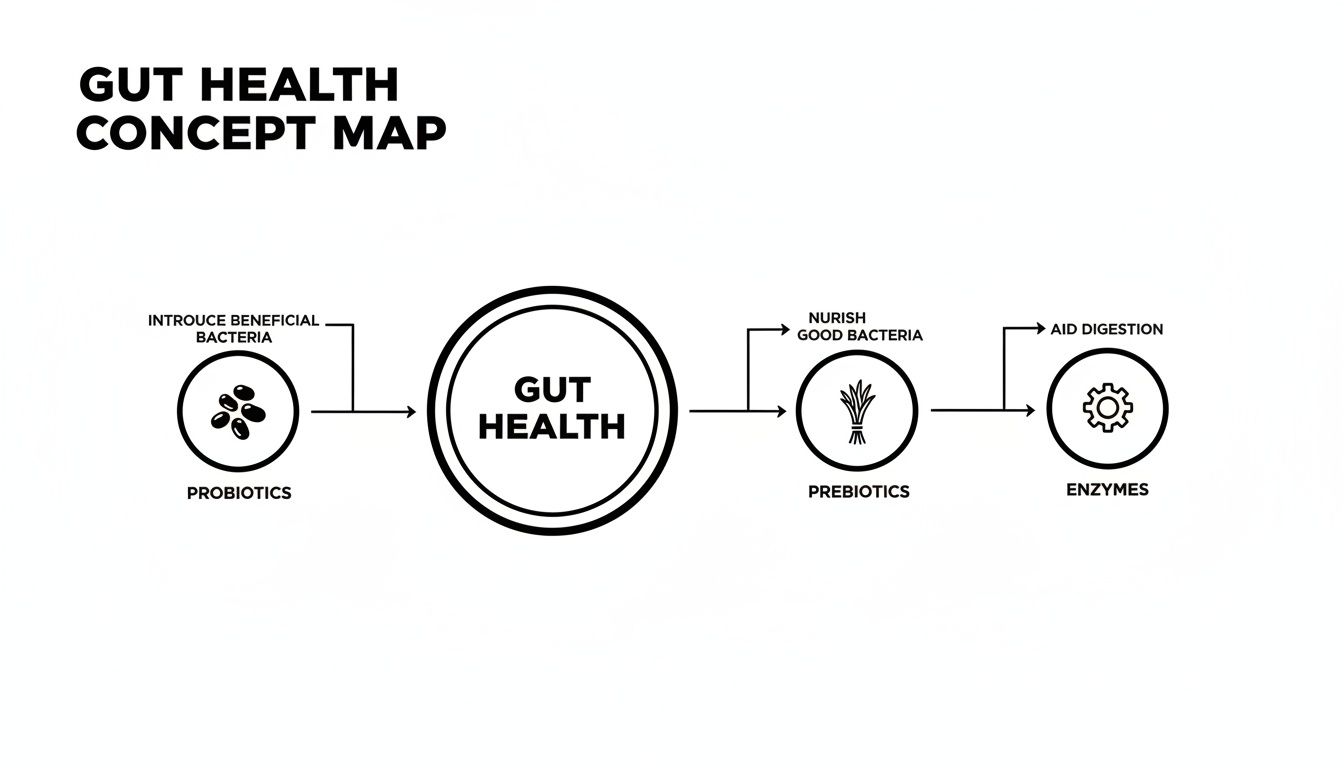
This map shows how each component plays a unique but connected role in building a balanced, thriving digestive system.
Probiotics: The Seeds of Your Gut Garden
First up are probiotics. These are the good seeds you want to plant in your garden. They're live, beneficial microorganisms—mostly bacteria, but some yeasts too—that actively support your health when you have enough of them. Taking a probiotic supplement is like directly sowing these helpful microbes into your digestive tract.
Of course, not all probiotics do the same thing. Different strains are like specialized workers, each with a specific job.
- Lactobacillus strains are common in yogurt and fermented foods. They're great at producing lactic acid, which helps create a gut environment where harmful bacteria can't easily take hold.
- Bifidobacterium strains mainly live in the large intestine. They're critical for breaking down complex carbs your body can’t handle on its own and even help produce essential B vitamins.
Together, these probiotic workers reinforce your gut lining, support your immune system, and help keep your microbiome in a healthy, harmonious state. A top-tier gut supplement will often feature a thoughtful blend of these beneficial strains.
Prebiotics: The Fertilizer for Your Flora
So, you’ve planted your seeds. What's next? You need to feed them. That’s where prebiotics come in—they act as the specialized fertilizer for all those good bacteria.
Prebiotics are essentially types of plant fiber that your body can't digest. Instead, they make their way down to your lower digestive tract, where they become the perfect food source for your resident probiotics.
By feeding the good microbes, prebiotics help them flourish and multiply, which in turn helps crowd out the less beneficial bacteria. This process is fundamental to creating a resilient and balanced gut ecosystem.
While prebiotics are found in many high-fiber foods, supplements offer a more concentrated source. Common types you’ll see on ingredient labels include:
- Inulin: A fiber found in chicory root, garlic, and onions.
- Fructooligosaccharides (FOS): Naturally occurring sugars in foods like bananas and asparagus.
When your probiotics start feasting on these prebiotic fibers, a fascinating fermentation process kicks off. And that leads us to the final piece of the puzzle.
Postbiotics: The Valuable Harvest
If probiotics are the seeds and prebiotics are the fertilizer, then postbiotics are the valuable harvest—all the good stuff your thriving garden produces. They are the beneficial compounds created by probiotics as they ferment prebiotic fiber.
These bioactive compounds include things like short-chain fatty acids (SCFAs), enzymes, and other beneficial molecules. The best part? Postbiotics aren't live organisms, which makes them incredibly stable and ready to get to work.
The benefits they deliver are direct and powerful. For instance, a key postbiotic called butyrate is the main fuel source for the cells lining your colon, helping to keep your gut wall strong and secure.
Here’s a quick look at what postbiotics do for you:
- Support Gut Barrier Function: They help strengthen the intestinal lining, which prevents unwanted substances from leaking into your bloodstream.
- Reduce Inflammation: Postbiotics have natural anti-inflammatory properties that can help soothe an irritated gut.
- Bolster Immune Health: They interact directly with your immune cells, helping to regulate and support a balanced immune response.
Understanding this trio is everything. A truly effective approach to gut health doesn't just add new bacteria—it nourishes the good ones you already have and makes use of the powerful compounds they produce. By making sure your internal garden has the seeds, fertilizer, and a healthy harvest, you’re creating a complete system for lasting gut wellness.
Discovering Essential Digestive Support Supplements
Beyond the 'biotics,' a team of other powerful supplements can fine-tune your digestive system, helping everything run more smoothly. If probiotics are the seeds and prebiotics are the fertilizer, think of these next players as the expert landscapers and maintenance crew for your internal garden.
They handle specific jobs that make a huge difference in how you feel every day.
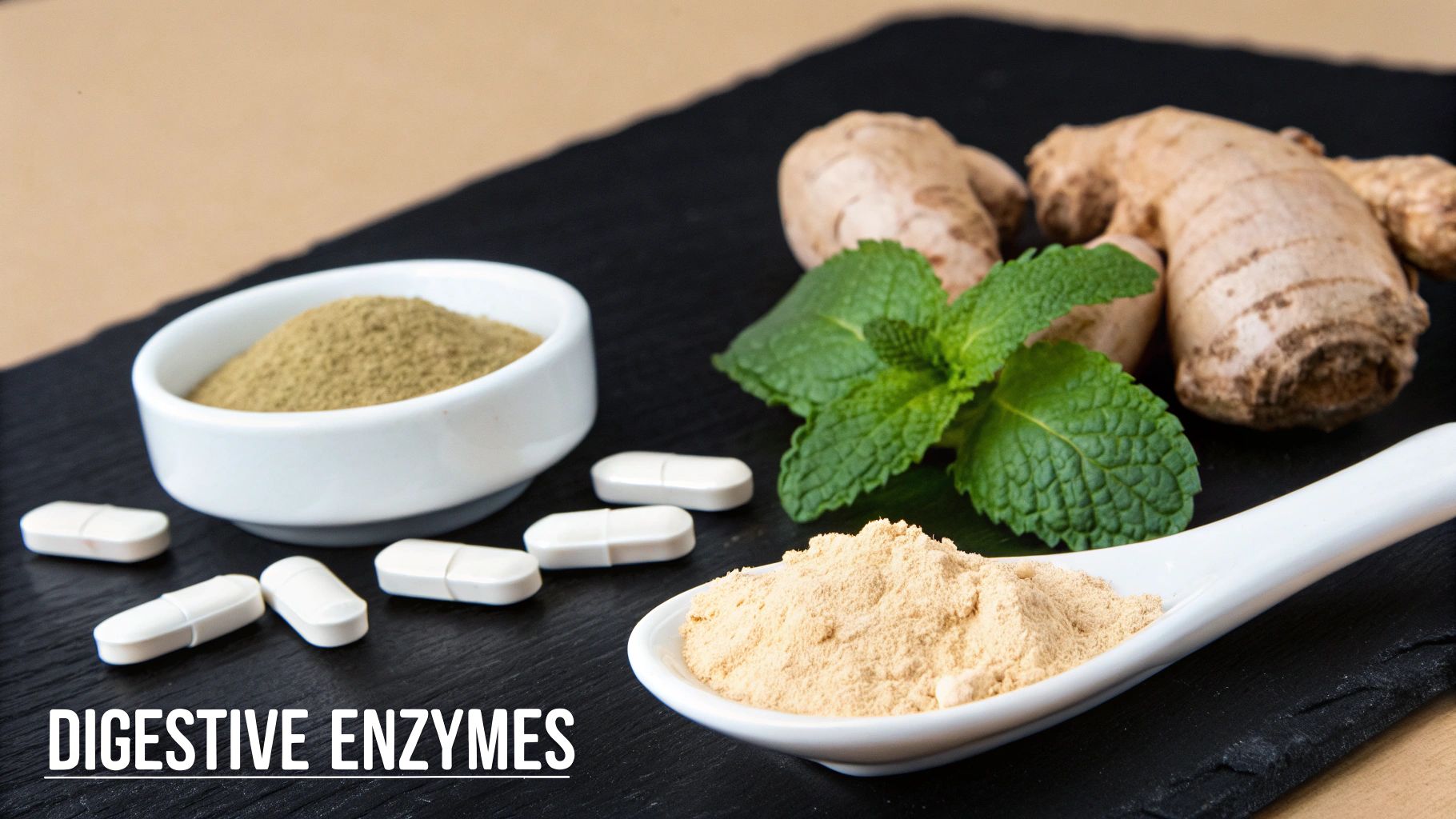
These components work to break down food more efficiently, repair your gut's protective barrier, and calm digestive discomfort, making them essential allies in your search for the best supplements for gut health.
Digestive Enzymes: Your Gut’s Kitchen Crew
Ever feel bloated, gassy, or uncomfortably full right after a meal? That’s often a sign your body is struggling to break down your food properly. This is where digestive enzymes come in, acting as your gut’s dedicated kitchen crew.
These specialized proteins are the catalysts that speed up digestion, dismantling large food molecules into smaller, absorbable nutrients. Without enough of them, even the healthiest food can cause discomfort because your body simply can't access its nutritional value.
While your body produces its own enzymes, things like age, stress, and certain health conditions can slow down production. Supplementing can help pick up the slack.
The three main types of digestive enzymes target different macronutrients:
- Protease: This enzyme focuses on breaking down proteins into amino acids.
- Amylase: This one handles carbohydrates, converting them into simple sugars for energy.
- Lipase: This is responsible for breaking down fats into fatty acids and glycerol.
A high-quality enzyme supplement will provide a blend of these to ensure your meals are fully deconstructed, which can help reduce post-meal bloating and maximize nutrient absorption.
Amino Acids: The Gut Lining Repair Team
Your gut is lined with a single layer of cells that form a tight barrier, carefully controlling what gets absorbed into your bloodstream. When this barrier becomes compromised—often called "leaky gut"—it can allow unwanted particles to pass through, triggering inflammation.
This is where specific amino acids, the building blocks of protein, play a crucial role. L-Glutamine, in particular, is often celebrated as the ultimate gut healer. It’s the most abundant amino acid in the body and serves as the primary fuel source for the cells lining your intestines.
Think of L-Glutamine as the essential raw material your body uses to patch up and reinforce the mortar between the cellular "bricks" of your gut wall. A strong, well-maintained barrier is fundamental to a healthy digestive system.
By providing a direct supply of this vital nutrient, L-Glutamine supports the continuous repair and maintenance of your gut lining. This helps ensure the barrier remains strong and intact, which is critical for preventing inflammation and supporting overall immune function. If you're looking for an all-in-one solution, check out how targeted formulas like Atelier Silente's Gut Health supplement incorporate these key supportive ingredients.
Essential Minerals: Zinc and Magnesium
While often associated with bone health or immunity, certain minerals are unsung heroes of the digestive system. They act as "helper molecules" that are essential for countless biochemical reactions, including those in your gut.
Two of the most important minerals for digestive wellness are:
- Zinc: This mineral is vital for maintaining the strength of the gut barrier. It also plays a key role in producing stomach acid, which is necessary for the initial breakdown of food and for killing off harmful pathogens.
- Magnesium: Known for its calming effects, magnesium helps regulate muscle contractions along the digestive tract, promoting smooth and regular bowel movements. It’s also involved in over 300 enzymatic reactions in the body, many related to digestion.
Ensuring you have adequate levels of these minerals provides foundational support, making sure all the other processes in your gut can function as they should.
Soothing Botanicals: Nature’s Digestive Calmers
Long before modern supplements existed, people turned to plants and herbs to soothe digestive troubles. These traditional remedies, now backed by modern evidence, offer a gentle yet effective way to calm an unsettled gut.
- Ginger: Famous for its ability to quell nausea, ginger also helps stimulate gut motility—the coordinated muscle contractions that move food through your digestive system. This can help prevent food from sitting in your stomach for too long, a common cause of indigestion.
- Peppermint: The active compound in peppermint, menthol, has a natural antispasmodic effect. This means it can help relax the muscles of the intestinal wall, providing relief from cramping, gas, and discomfort.
These botanicals don't just mask symptoms; they actively support digestive comfort by addressing some of the root causes of irritation and sluggishness.
How to Choose the Right Gut Health Supplement
Walking down the supplement aisle can be completely overwhelming. With so many options, how do you know what actually works? The good news is that a few key quality markers can help you cut through the noise and confidently choose a product that offers genuine benefits for your digestive wellness.
The market for gut health products is enormous and only getting bigger. It's projected that North America will make up about 35.8% of global digestive health revenues in 2025, with the US market alone expected to hit USD 23.2 billion. This growth is fueled by a huge spike in consumer awareness connecting gut health to just about everything else. With so much at stake, it’s more important than ever to be an informed shopper. You can read more about these digestive health supplement market trends to get the full picture.
Decoding the Supplement Label: A Checklist
To help you become a more confident shopper, we’ve put together a simple checklist. Think of this as your guide to reading a supplement label and spotting the high-quality formulas.
| Quality Factor | What to Look For | Why It Matters |
|---|---|---|
| Ingredient Transparency | Clear listing of all active ingredients, including specific probiotic strains (e.g., Bifidobacterium lactis) and their amounts. | Vague terms like "probiotic blend" don't tell you what you're actually getting. Specificity shows the brand has done its research. |
| Effective Probiotic Dose (CFUs) | For general support, a CFU count between 10 to 20 billion. Specific health goals may require different doses. | CFUs (Colony Forming Units) measure the number of live, active bacteria. You need enough to make a real impact. |
| Strain Diversity | A formula with multiple, well-studied strains from different families, like Lactobacillus and Bifidobacterium. | Different strains have different jobs. A multi-strain formula offers broader support for your gut ecosystem. |
| Synbiotic Formulas | The inclusion of prebiotics (like FOS or inulin) alongside probiotics. | This creates a synbiotic effect—you're not just planting the seeds (probiotics), you're also providing the fertilizer (prebiotics) they need to grow. |
| Third-Party Certifications | Seals from independent organizations, like GMP (Good Manufacturing Practices), on the label. | The supplement industry isn't tightly regulated. Third-party testing verifies that what's on the label is what's in the bottle, and that it's pure. |
By keeping these points in mind, you can quickly separate the thoughtfully formulated products from the rest of the pack. It's all about ensuring you're investing in something that’s safe, effective, and truly designed to support your health.
Choosing the Right Delivery Form
Gut health supplements aren't one-size-fits-all, and that includes the form they come in. The best choice for you really comes down to what fits your lifestyle and preferences. You'll mainly find capsules, powders, and liquids.
Each format has its own unique pros and cons.
| Delivery Form | Pros | Cons |
|---|---|---|
| Capsules | Convenient, tasteless, and often have protective coatings to help live probiotics survive the journey through your stomach. | Some people find them difficult to swallow. |
| Powders | Easy to mix into drinks or food like smoothies and yogurt. You can also adjust your dose more easily. | May have a noticeable taste or texture, and offer less protection from stomach acid unless specifically formulated. |
| Liquids | Can be simple to take and may offer quicker absorption for some nutrients. | Often need to be refrigerated, have a shorter shelf life, and may not keep live probiotics stable for long. |
When it comes to probiotics, capsules with delayed-release technology are often the superior choice. This special coating is designed to protect the delicate live bacteria from the harsh, acidic environment of your stomach, ensuring more of them arrive alive in your intestines where they can actually get to work.
If you want to dig deeper into how different formats stack up, our guide comparing pill vs. powder forms offers more detailed insights. At the end of the day, the best delivery method is the one you’ll actually stick with.
Integrating Gut Supplements into Your Daily Routine
You’ve done the research and picked out a great gut health supplement. Fantastic. But the real magic happens when you make it a seamless part of your daily life. Consistency is what turns a good choice into a powerful wellness strategy, giving your internal ecosystem the steady support it needs to truly thrive.

This goes beyond just remembering to take a pill. To get the absolute most out of your supplement, you need a smart plan—one that considers timing, how it works with other supplements, and the broader lifestyle habits that can either supercharge or sabotage its effects. Let's build that routine.
Finding Your Perfect Timing
One of the first questions people ask is when to take their gut supplement. The answer often comes down to the specific formula, so your first move should always be to read the product label. That said, some general guidelines can help you nail down your schedule.
- Probiotics: Most experts suggest taking these on an empty stomach, about 20-30 minutes before a meal. This helps the live bacteria survive the harsh environment of your stomach acid and make it to your intestines, where they do their work.
- Digestive Enzymes: Think of these as your mealtime partners. Take them just before or right as you start eating to make sure they’re ready to help break down fats, proteins, and carbs from the very first bite.
- L-Glutamine and Botanicals: These are generally more flexible. They can be taken any time of day, though some people find they absorb best between meals.
The most important rule? Be consistent. Taking your supplement around the same time every day helps your body adapt and turns the action into a simple, second-nature habit.
The Power of Stacking Supplements
No supplement works in a vacuum. A truly effective wellness routine involves "stacking"—thoughtfully combining supplements to create a synergistic effect where the whole becomes greater than the sum of its parts. Think of a balanced gut as the foundation that makes everything else you do more effective.
For example, a healthy gut microbiome is crucial for producing neurotransmitters like serotonin, which directly influences your mood and sleep. This is the gut-brain axis in action. By pairing a gut health formula with a sleep aid, you're supporting both ends of that critical connection for a more restorative night. In the same way, a happy gut improves nutrient absorption, which can make your post-workout recovery supplements even more impactful.
This integrated approach is catching on. The global digestive health market is expected to balloon from USD 77.0 billion in 2025 to USD 178.1 billion by 2034, largely driven by adults who want daily comfort and better overall wellness. As a recent gut health supplement market analysis shows, people are realizing that combining foundational products is the key to amplified results.
Lifestyle Habits That Amplify Your Results
Finally, remember that your supplement is a powerful tool, but it works best as part of a bigger picture. Certain lifestyle choices create an environment where your gut can truly flourish, making your supplement’s job that much easier.
To get the most out of your investment, focus on these three pillars:
- Eat a Fiber-Rich Diet: Prebiotic fiber from fruits, vegetables, and whole grains is the preferred food for your good gut bacteria. Feed them well.
- Stay Hydrated: Water is essential for every single digestive process, from breaking down food to keeping things moving along smoothly.
- Manage Stress: Chronic stress can wreak havoc on your gut microbiome. Make time for practices like meditation, deep breathing, or even just a quiet walk.
By weaving your supplement into these supportive habits, you create a multi-faceted approach to lasting gut wellness. You might also find that specific ingredients, like those in apple cider vinegar capsules, can add another layer of digestive support to your daily routine.
Your Next Steps Toward Lasting Gut Wellness
Taking that first step toward better gut health can feel like a big one, but it’s an incredible investment in your overall vitality. You now have a clear map of the key players—from the essential 'biotics to enzymes and soothing botanicals—that work together to bring your internal ecosystem back into balance. This isn't about chasing perfection; it's about making smart, informed choices.
Lasting wellness doesn’t come from a single quick fix. It’s built on consistent, supportive habits. Starting with a high-quality, comprehensive supplement gives your body the foundational support it needs to rebalance and thrive, which in turn makes every other healthy choice you make even more powerful.
A Quick Recap of Your Gut Health Toolkit
Let's do a quick rundown of what you’ve learned. Think of these supplement categories as your personal gut wellness team, ready to get to work.
- Probiotics, Prebiotics & Postbiotics: This is the core trio. They seed your gut with beneficial bacteria, feed them the right fuel to flourish, and deliver the powerful byproducts that support your gut lining and immune system.
- Digestive Enzymes: Your mealtime allies. They help break down food efficiently, which means better nutrient absorption and far less of that common bloating and post-meal heaviness.
- Amino Acids & Botanicals: These are your repair and calming crew. L-Glutamine helps strengthen the gut barrier, while botanicals like ginger and peppermint offer gentle, natural relief from irritation.
With this knowledge, you’re in a much better position to find the best supplements for gut health that truly fit what your body is asking for.
Taking control of your digestive wellness is one of the most impactful decisions you can make for your long-term health. A balanced gut is the bedrock of improved energy, sharper focus, and a more resilient immune system.
Charting Your Course Forward
So, what's next? Take a moment to think about your personal wellness goals. Are you trying to finally get smoother digestion? Looking for more consistent energy? Or maybe you’re after clearer mental focus? Whatever your goal, a well-supported gut is the key to getting there.
You don't have to overhaul everything at once. Start small by adding one positive change, like a well-formulated daily supplement, and build from there. Remember, consistency beats intensity every time. When you pair a great supplement with a fiber-rich diet and mindful habits, you create a powerful synergy that fosters deep, lasting well-being from the inside out.
You're ready. It's time to take confident, decisive action toward a healthier, more vibrant you.
Your Questions, Answered
Venturing into the world of gut health supplements can bring up a lot of questions. It's a crowded space, and we want you to feel confident in the choices you make for your body. Here are a few of the most common queries we hear.
How Long Until I Notice a Difference?
This is probably the most common question, and the honest answer is: it varies. Since every gut microbiome is completely unique, there's no single timeline. Some people feel a welcome relief from things like bloating and gas within the first few days to a week of starting.
For the more profound, long-term benefits—like a stronger immune system or a noticeable shift in your mood via the gut-brain connection—patience is your friend. It can often take four to eight weeks of consistent use for your gut flora to find a new, healthier equilibrium. The key, above all, is consistency.
Can't I Just Get Everything I Need from Food?
A diet filled with fiber-rich and fermented foods is absolutely the foundation of good gut health. But in the real world, it’s not always enough. Modern diets, chronic stress, and even necessary medications can make it incredibly difficult to get a truly therapeutic dose of beneficial microbes and nutrients from food alone.
Supplements step in to offer targeted, concentrated support. They deliver specific, well-researched probiotic strains and other nutrients at levels that are often hard to replicate through diet, no matter how clean it is.
A great way to think about it: your healthy diet is like regular maintenance for your car. A targeted supplement is like bringing in a specialist mechanic to fine-tune the engine for peak performance. You really need both for the long haul.
Are There Any Side Effects I Should Expect?
For the vast majority of people, gut health supplements are very safe and well-tolerated. When you first start a new probiotic, it's not unusual to experience some temporary, mild gas or bloating. This is just your microbiome adjusting to the new, beneficial bacteria taking up residence.
This adjustment period is often a sign that good things are happening, and it typically quiets down within a few days. Of course, if you have a compromised immune system or a serious medical condition, it's always smart to chat with your healthcare provider before starting any new supplement.
When Is the Best Time of Day to Take Them?
Timing can definitely influence how well your supplements work, so the first step is always to check the product label for specific directions. As a general guideline, many probiotics do best when taken on an empty stomach, about 20 to 30 minutes before a meal. This helps them get past the harsh stomach acid more quickly and effectively.
Digestive enzymes, on the other hand, should be taken right before or during your meal to help your body break down food. No matter the specific timing, the most important factor is simply remembering to take them. Find a time that fits into your daily routine, and stick with it.
Ready to give your gut the comprehensive support it deserves? Atelier Silente offers thoughtfully formulated wellness solutions designed to integrate seamlessly into your life. Discover how you can build a foundation for lasting health from the inside out. Explore our collection at ateliersilente.com.


