Discover what is methylene blue used for: Uses, Benefits, and Safety

From a 19th-century textile dye to a 21st-century wellness supplement, methylene blue has a surprisingly rich and varied history. While it began as a way to color cotton, its journey quickly pivoted into medicine, becoming the first-ever synthetic antimalarial drug. Today, it stands as a compound with a legacy in groundbreaking pharmacology and a future in modern wellness.
The Unlikely Journey of Methylene Blue
Long before it became a topic in wellness circles, methylene blue was a workhorse of industry and science. Its story begins not in a pharmacy but in a textile factory. This vibrant, synthetic compound was first created for a straightforward purpose: to give fabrics a deep, lasting blue hue.
But its unique chemical properties soon caught the attention of scientists who saw potential far beyond coloring clothes. They discovered its distinct color and ability to interact with living cells made it an exceptional biological stain. This simple observation marked a huge turning point, setting the stage for its leap from industrial dye to medical tool.
From Staining Cotton to Fighting Malaria
The transition from fabric dye to frontline medicine happened remarkably fast. Methylene blue was first synthesized in 1876 by German chemist Heinrich Caro as a powerful dye for the booming textile industry. Just over a decade later, physician Paul Ehrlich used it to stain tuberculosis bacteria, proving dyes could selectively target pathogens without harming the surrounding tissue.
This discovery helped form his famous "magic bullet" theory of targeted medicine. By 1891, Ehrlich and Paul Guttmann pioneered its use against malaria, making it the first fully synthetic drug used in humans. You can read more about the origins of this versatile compound and its historical uses.
This early success story cemented methylene blue’s reputation as more than just a dye. It was a problem-solver, a multi-purpose compound that could adapt to the scientific challenges of its time. Its journey highlights a key theme in medical innovation: sometimes, the most important discoveries come from the most unexpected places.
Methylene blue's history is a perfect example of scientific serendipity. What began as a tool for industry became a lifesaver, demonstrating that a compound's true potential is often unlocked through curiosity and cross-disciplinary application.
A Legacy of Adaptability
Understanding this origin story is key to grasping what methylene blue is used for today. Its initial roles laid the groundwork for its modern applications, from critical hospital uses to emerging wellness protocols.
The compound's ability to act as a biological stain is still leveraged in surgery, while its foundational role in medicine has inspired new research into its effects on cellular energy and brain health. This rich history provides crucial context, showing that its current popularity isn't a fleeting trend but the next chapter in a long story of scientific discovery and reinvention.
How Methylene Blue Works in Hospital Emergencies
While its story started in textile mills, methylene blue has carved out an essential role in modern medicine—especially in the high-stakes environment of a hospital emergency room. Here, it’s not about cognitive enhancement; it’s a powerful, fast-acting agent used to pull patients back from the brink in life-threatening situations.
Its most critical, FDA-approved application is treating a rare but deadly blood disorder called methemoglobinemia. This condition essentially makes your red blood cells useless for delivering oxygen to your tissues. Methylene blue acts like a master mechanic, quickly getting those cells back online and restoring the body’s oxygen flow.
This specific, proven medical use is fundamental to understanding methylene blue's power. It shows how it can intervene at a core biological level—a theme we'll see pop up again and again.
Restoring Oxygen Delivery in Methemoglobinemia
Think of your bloodstream as a highway and your red blood cells as delivery trucks packed with oxygen. In methemoglobinemia, the trucks are fully loaded, but their unloading mechanism is broken. They just can't drop off their life-sustaining cargo to the organs and tissues that are starving for it.
When this happens, the body’s oxygen levels plummet. The result? Blue-tinged skin, shortness of breath, and confusion. This kind of emergency can be set off by exposure to certain anesthetics, industrial chemicals, or even a handful of medications.
Methylene blue steps in to fix the problem with incredible speed. Given intravenously, it fires up an enzyme that essentially repairs that "unloading mechanism" on the faulty hemoglobin. It helps convert the dysfunctional methemoglobin back into normal, oxygen-carrying hemoglobin, often reversing the crisis in less than an hour.
Managing Shock During Heart Surgery
Beyond its use as a direct antidote, surgeons also rely on methylene blue to manage a dangerous complication known as vasoplegic syndrome, or vasodilatory shock. This sometimes happens during complex procedures like open-heart surgery, where blood vessels relax and expand so much that blood pressure drops to life-threatening levels.
Picture your circulatory system as a network of hoses. If those hoses suddenly become far too wide, the water pressure inside collapses. In vasoplegic syndrome, this dramatic loss of pressure means blood can't get to the heart, brain, and kidneys.
Methylene blue works by blocking an enzyme that causes this extreme blood vessel relaxation. In doing so, it helps the vessels regain their tone and constrict back to a normal size. This simple action stabilizes blood pressure and ensures vital organs keep getting the blood flow they need to survive a critical operation.
Protecting the Brain from Chemotherapy Toxicity
Another crucial emergency use is counteracting the neurotoxic side effects of certain chemotherapy drugs. Some cancer treatments are so potent they can cause severe brain-related issues, a condition called encephalopathy.
This particular use is fascinating because it highlights methylene blue's ability to cross the blood-brain barrier and work directly inside the central nervous system. It's a key reason researchers are so interested in its potential for broader neurological health.
In cases of chemotherapy-induced toxicity, methylene blue is thought to help restore normal mitochondrial function within brain cells that have been disrupted by the powerful drugs. By supporting cellular energy production, it helps limit the damage and can reverse symptoms like confusion and severe lethargy. These established medical uses aren't just trivia; they demonstrate its potent biological activity and provide the scientific backbone for exploring its emerging uses in wellness and cognitive support.
A Powerful Tool for Surgeons and Diagnosticians
Beyond its role in emergency medicine, methylene blue has another, more visual trick up its sleeve. Its intense, vibrant color makes it an indispensable tool in the operating room, acting like a biological highlighter for surgeons.
Think of it as a GPS for the human body. By injecting this blue dye, doctors can create a clear map of critical structures, illuminating pathways and tissues that would otherwise be invisible. This simple property—its ability to stain—has fundamentally improved surgical accuracy and patient outcomes for over a century.
Illuminating Hidden Pathways in Cancer Surgery
One of the most critical roles for methylene blue is in oncology, particularly for staging cancers like breast cancer and melanoma. Surgeons need to know if the cancer has started to spread, and they figure this out with a sentinel lymph node biopsy. This procedure identifies and removes the very first lymph node that drains fluid from a tumor.
Methylene blue is injected near the tumor, where it's quickly picked up by the lymphatic system. It then travels through the lymphatic vessels, staining the sentinel node a brilliant blue. This lets the surgeon instantly spot and remove the correct node for testing, avoiding the need for more extensive and invasive lymph node removal.
This technique is a cornerstone of modern cancer surgery. In the U.S. alone, it's used in over 100,000 sentinel lymph node biopsies every year for breast cancer. By making these "hot" nodes visible, it helps boost detection rates to 95%, which is a huge factor in reducing the risk of cancer coming back. You can read more about its diagnostic power in medical research on its surgical uses.
By making the invisible visible, methylene blue acts as a surgeon's guide. It helps ensure that what needs to be removed is taken out, and what needs to be preserved is left untouched, leading to safer and more effective surgeries.
A Beacon for Glands and Abnormal Tissues
This "biological highlighter" function is also a game-changer in other delicate surgeries. For instance, the parathyroid glands are four tiny, rice-sized glands in the neck that are notoriously hard to find. Methylene blue helps surgeons locate these elusive glands in 85-90% of cases, slashing complication rates from 10% down to under 2%.
It’s also used to:
- Identify Fistulas: For abnormal tracts between organs (fistulas), injecting the dye maps the pathway so surgeons know exactly where to operate.
- Confirm Surgical Integrity: During urinary tract procedures, it's used to check for leaks, ensuring everything is secure before the incision is closed.
- Aid in Endoscopy: In a technique called chromoendoscopy, gastroenterologists use it to make precancerous lesions in the colon stand out during a colonoscopy.
These applications all rely on methylene blue's most obvious trait—its color. Here’s a quick summary of its key roles in the operating room.
Methylene Blue in Medical Procedures
The table below breaks down some of the most common ways methylene blue is used to guide surgeons and improve diagnostic accuracy.
| Procedure Type | Methylene Blue's Role | Primary Benefit |
|---|---|---|
| Sentinel Lymph Node Biopsy | Stains the first draining lymph node blue to identify potential cancer spread. | Improves accuracy of cancer staging and minimizes unnecessary tissue removal. |
| Parathyroidectomy | Selectively stains parathyroid glands, making them easier for surgeons to locate. | Reduces operating time and lowers the risk of surgical complications. |
| Fistula Mapping | Injected into an abnormal tract to visually map its path for surgical repair. | Provides a clear visual guide, enabling precise and effective surgical correction. |
| Chromoendoscopy | Sprayed onto the colon lining to highlight abnormal or precancerous growths. | Enhances detection of polyps and lesions that might otherwise be missed. |
These well-established uses in hospitals provide a solid foundation of credibility. They show methylene blue’s direct and powerful interaction with our biology, bridging the gap from high-dose medical applications to the more subtle actions it has at the cellular level—which we’ll explore next.
Exploring Its Potential for Brain and Mitochondrial Health
While methylene blue is a proven lifesaver in hospitals and a precise tool for surgeons, a different story is unfolding in the world of wellness. The focus is shifting from high-dose emergency interventions to low-dose daily support, all thanks to fascinating research into its effects on our most fundamental biological processes.
This new chapter explores what methylene blue is used for at the cellular level, particularly its remarkable interaction with our mitochondria—the microscopic power plants inside nearly every cell.
A Booster for Your Cellular Power Grid
Imagine your body's cells run on a complex power grid. The mitochondria are the power stations, and a process called the electron transport chain is the network of wires that generates energy. As we age or face metabolic stress, this grid can become less efficient, leading to dips in energy, focus, and overall vitality.
Methylene blue, at very low doses, acts like a skilled technician for this grid. It functions as an "electron cycler," creating a bypass that helps electrons flow smoothly even when parts of the system are sluggish. This action directly supports the production of ATP (adenosine triphosphate), the primary energy currency of the cell.
Think of it as a power grid booster. By improving the efficiency of energy generation right at the source, methylene blue helps ensure your cells have the fuel they need to perform at their best, from powering muscle contractions to firing neurons.
This mechanism is exactly why it has captured the attention of those seeking to enhance cellular energy. It doesn't just provide a temporary jolt like caffeine; it works on the underlying machinery of energy production itself.
Nootropic Effects and Cognitive Support
This mitochondrial support has direct implications for our most energy-hungry organ: the brain. Brain cells are packed with mitochondria, requiring a constant supply of ATP to manage everything from memory recall to complex problem-solving. By optimizing mitochondrial function, methylene blue is being studied for its potential nootropic—or cognitive-enhancing—effects.
Research suggests it may improve both short-term and long-term memory. Studies have shown it can enhance memory consolidation, the process of converting fleeting thoughts into lasting memories. This has made it a compound of interest for anyone looking to sharpen their mental edge, from students to professionals.
The infographic below illustrates some of the therapeutic applications that have stemmed from its unique properties.
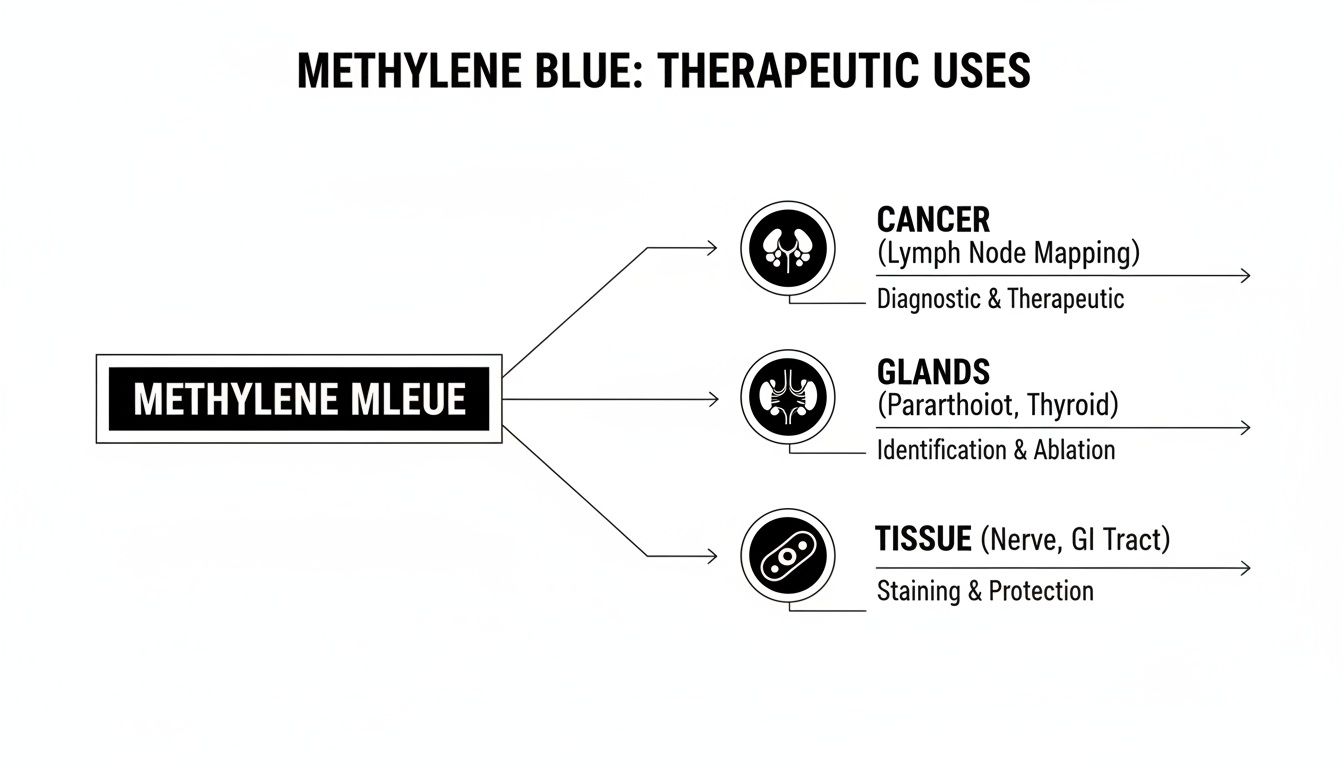
This visual highlights how its ability to selectively stain tissues has made it an invaluable tool in procedures involving cancer detection, gland identification, and general tissue analysis.
Neuroprotection and Anti-Aging Potential
Beyond immediate cognitive enhancement, methylene blue is also being investigated for its neuroprotective qualities. Put simply, it may help defend brain cells against damage and age-related decline. A key area of research involves its ability to prevent the clumping of certain proteins in the brain.
Specifically, it has been shown to inhibit the aggregation of tau proteins and amyloid-beta plaques, which are hallmarks of neurodegenerative conditions like Alzheimer's disease. While this research is still evolving, the initial findings are incredibly promising.
Its potential anti-aging benefits are linked to a few key actions:
- Mitochondrial Support: By keeping cellular power plants running efficiently, it may combat the age-related decline in energy production.
- Antioxidant Activity: It can neutralize harmful free radicals, reducing the oxidative stress that contributes to cellular aging.
- Protein Regulation: Its ability to interfere with toxic protein clumps offers a potential avenue for preserving long-term brain health.
These mechanisms work together, making methylene blue a multifaceted compound for brain health. This is why many people are exploring it alongside other cellular health supporters. To understand how these compounds work together, you might be interested in learning more about NAD+, another key molecule for cellular energy.
It’s important to distinguish between established medical uses and these exciting but emerging areas of research. While evidence for its wellness applications is growing, you should always approach it with an informed and cautious mindset, prioritizing purity and proper dosing.
Navigating Safety, Dosing, and Practical Use
To really understand what methylene blue is used for, we need to draw a hard line between its different applications. The high doses given through an IV in a hospital setting are worlds apart from the tiny doses used for cognitive support and general wellness. Getting this distinction right is the first step toward using it safely.
Medical treatments for things like methemoglobinemia require big, fast-acting doses under a doctor's watchful eye. On the other hand, the emerging research for mitochondrial function and brain health is all about a "less is more" philosophy, using micro-doses that are just a fraction of the medical amount. This isn’t a situation where more is better; its biological effects change dramatically depending on the dose.
Understanding Purity and Grade
Before you even think about a dose, the single most important factor is the grade of the methylene blue. It comes in different forms, and using the wrong one is flat-out dangerous.
- Industrial Grade: This is the stuff used to dye jeans or stain slides in a lab. It’s not meant for humans and can be loaded with dangerous heavy metals like arsenic, lead, and cadmium.
- USP Grade: This stands for United States Pharmacopeia grade. It’s a guarantee of purity, ensuring the product is safe for human use and has been rigorously tested to be free from those nasty contaminants.
When it comes to taking methylene blue for wellness, using anything other than pure, USP-grade is a serious health risk. You should always verify the purity and grade from any supplier to make sure you aren't accidentally ingesting industrial chemicals.
Think of it this way: you wouldn't use tap water for an IV drip, right? Both are water, but only one is prepared to be safely used inside the body. This distinction is just as critical.
Potential Side Effects and What to Expect
Even when you’re using the right grade and a low dose, methylene blue comes with a few signature side effects you should know about. The most obvious—and harmless—one is its powerful dyeing effect.
It's completely normal to see blue or green-tinged urine after taking it. This is just your body processing and getting rid of the compound. It can also temporarily stain your tongue and mouth. To keep staining to a minimum, try diluting the drops in water, drinking it with a straw, and giving your mouth a good rinse right after.
While most people tolerate it well at low doses, some might feel a bit of mild nausea or a headache. The best way to see how you'll react is to start with the absolute lowest dose and see how you feel.
Critical Safety Warnings and Interactions
Beyond the minor stuff, there are some major safety warnings you cannot ignore. Methylene blue is a powerful compound and can interact badly with a lot of common medications, making it a no-go for many people.
The biggest risk is serotonin syndrome, a potentially fatal condition that can happen when methylene blue is mixed with certain drugs. This is because methylene blue is a potent monoamine oxidase inhibitor (MAOI).
You should NEVER take methylene blue if you are using:
- SSRIs (Selective Serotonin Reuptake Inhibitors): Think common antidepressants like Prozac, Zoloft, or Lexapro.
- SNRIs (Serotonin-Norepinephrine Reuptake Inhibitors): This includes medications like Cymbalta or Effexor.
- Other MAOIs: Taking it with other MAOI drugs is extremely dangerous.
This combination can cause serotonin levels in the brain to skyrocket, leading to scary symptoms like agitation, a racing heart, high blood pressure, and confusion. You must tell your doctor about every single medication and supplement you take before even considering it.
Also, people with a genetic condition called G6PD deficiency should stay away from methylene blue, as it can trigger the breakdown of their red blood cells.
Given how complex this all is, making an informed choice is key. To ensure you're starting with a quality product, you can explore options like Atelier Silente's pure, USP-grade Methylene Blue Drops, which were designed with safety and effectiveness in mind. Responsible use always begins with a superior product and a clear understanding of the risks.
Answering Your Top Questions About Methylene Blue
We've covered a lot of ground, from methylene blue's role in hospital settings to its emerging use for wellness. As with any compound this versatile, it's only natural to have a few questions. Its broad profile might seem complicated, but once you have the right information, understanding how to use it is actually quite simple.
Let's clear things up. This section gives you direct, no-nonsense answers to the most common questions about safety, daily use, that distinctive blue color, and critical medication interactions so you can move forward with confidence.
Is It Safe to Take Methylene Blue Every Day?
This is easily the most common question we hear, and the answer really comes down to dosage and your personal health situation. The wellness protocols being explored today use very low doses—often just a few drops. While this approach is growing in popularity, it's true that long-term studies on daily use are still in their early stages.
Your safety starts with the quality of the product. It is absolutely critical to use only high-purity, USP-grade methylene blue. This grade ensures the product is free from the heavy metal contaminants often found in industrial versions. Just as important, you should always consult a healthcare professional before starting any new supplement. They can help you decide if it’s a good fit for you, especially if you have pre-existing health conditions or are taking other medications.
A good rule of thumb for any supplement is to start low and go slow. Pay attention to how your body feels, and never go over the recommended dose on the label.
Will Methylene Blue Stain My Teeth or Skin?
Yes, it probably will, but don't worry—the staining is temporary. Methylene blue is a powerful dye. It’s what makes it so useful in a surgical setting, but it also means it will temporarily color anything it touches, including your tongue, teeth, and mouth.
Luckily, this is easy to manage. Most people have great success with a few simple tricks:
- Dilute It Well: Always mix your drops into a full glass of water or another drink. This brings down the concentration that comes into direct contact with your mouth.
- Use a Straw: This is the best trick in the book. Drinking the diluted mix through a straw lets you bypass your teeth and tongue almost completely.
- Rinse Right After: Once you’re done, swish your mouth with plain water. You can also brush your teeth soon after to get rid of any lingering blue.
If you happen to spill some on your skin, those stains are temporary too. A little soap and water will usually take care of it, and any leftover color will fade within a day or two as your skin naturally exfoliates.
Why Can’t I Take Methylene Blue with Antidepressants?
This is the single most important safety warning to understand. Methylene blue is a potent monoamine oxidase inhibitor (MAOI). MAOIs are a class of compounds that change the levels of neurotransmitters, like serotonin, in the brain.
Many common antidepressants, including SSRIs (like Prozac and Zoloft) and SNRIs (like Cymbalta and Effexor), also work by raising serotonin levels. If you combine an MAOI like methylene blue with these medications, you create a risk of a sudden, dangerous spike in brain serotonin.
This can lead to a life-threatening condition known as serotonin syndrome. Symptoms can range from agitation and a racing heart to seizures and even loss of consciousness. Because this interaction is so severe, you must not use methylene blue if you take any serotonergic medication. Always give your doctor a full list of every supplement and medication you're on before considering it. If you're looking for other ways to support cognition, our guide on the benefits of a brain and focus boost may offer some useful alternatives to discuss with your provider.
What Is the Difference Between USP Grade and Industrial Grade?
The line between USP grade and industrial grade is all about one thing: purity and safety for human use. Getting this distinction right is non-negotiable for anyone looking into what methylene blue is used for in a wellness context.
USP (United States Pharmacopeia) Grade is a pharmaceutical standard. This certification is your guarantee that the methylene blue has been rigorously tested to be free of harmful contaminants, which often include heavy metals like:
- Arsenic
- Lead
- Cadmium
- Mercury
Industrial Grade, however, is made for things like dyeing fabrics or treating fish tanks. It isn’t purified to remove these toxic metals and is absolutely not safe to ingest. When it comes to any internal use, only USP-grade methylene blue from a source you trust is a safe option.
At Atelier Silente, our commitment is to elevate your wellness routine with products grounded in purity and quality. Our Methylene Blue Drops are USP-certified and formulated to integrate seamlessly into your daily life, offering a reliable foundation for your cellular health and cognitive support goals.
Discover Atelier Silente Methylene Blue Drops and enhance your routine today.


