Best skincare for dark spots: Restore radiance with proven routines

If you're looking to tackle dark spots, your best bet is a smart combination of powerhouse ingredients. Think Vitamin C to protect your skin, retinoids to speed up cell turnover, and niacinamide to stop pigment from spreading. A solid routine pairs these active ingredients with daily sunscreen to help fade the marks you have and, just as importantly, prevent new ones from showing up.
Your Essential Guide to Fading Dark Spots for Good
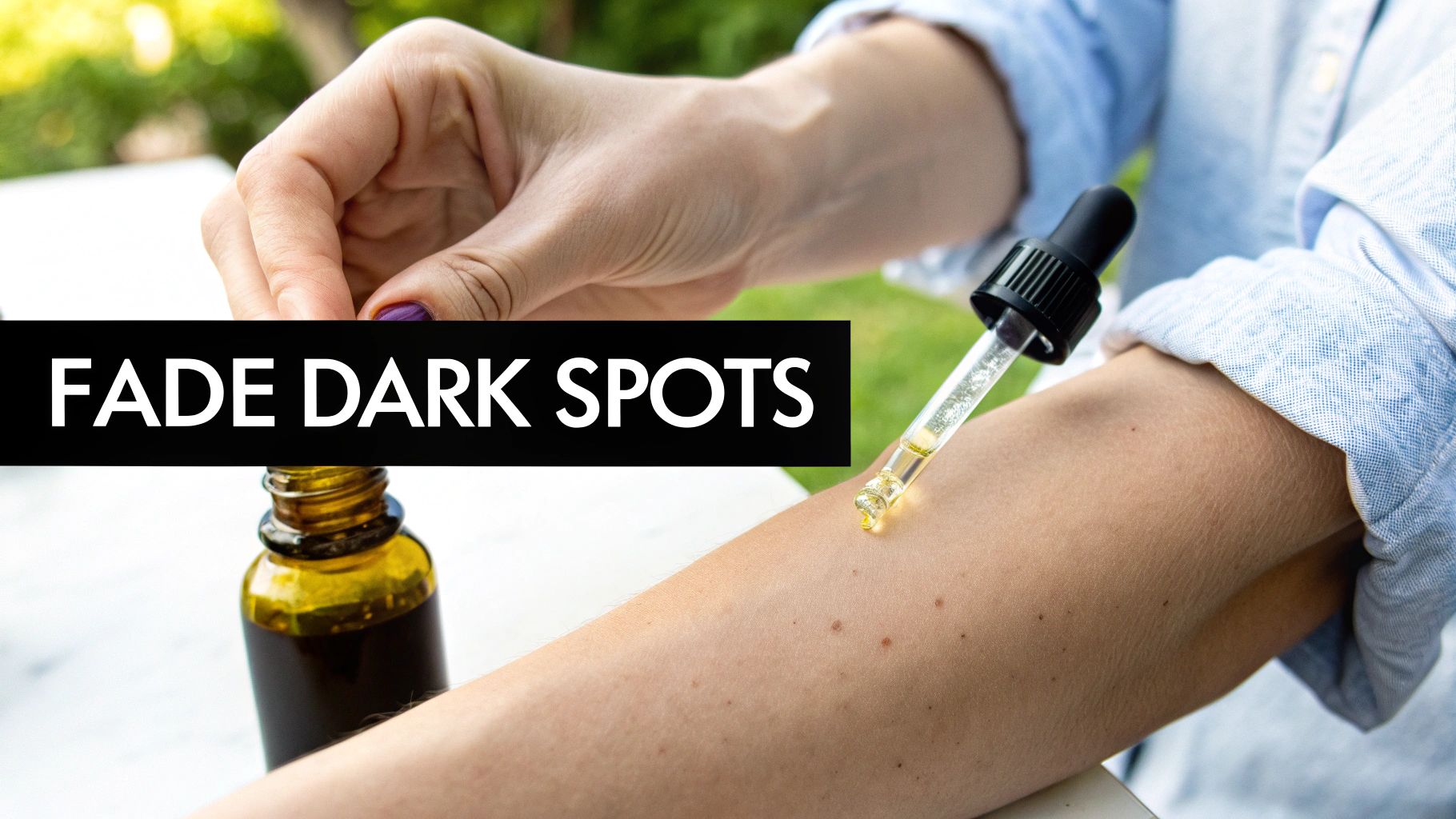
Dealing with an uneven skin tone is a common struggle, and for many, finding a way to get clear, even skin is a top priority. This guide is designed to move you beyond quick fixes and help you build a real, lasting strategy against those stubborn spots. We'll get into the root causes of hyperpigmentation, from sun damage to the lingering reminders of old breakouts.
Think of it like restoring a delicate piece of art—some spots need a gentle touch, while others require more focused work. The key is to understand what you're up against so you can choose the right tools for the job. This isn't about finding one "magic" cream; it's about building a consistent, multi-step approach that supports your skin's long-term health.
Why Dark Spots Are a Growing Concern
If you're on this journey, you're definitely not alone. Dark spots are one of the biggest concerns for skincare lovers all over the world, which has led to huge growth in the market for hyperpigmentation treatments. In fact, this market hit USD 1.39 billion in 2024 and is expected to climb to USD 2.02 billion by 2030. This surge is driven by a growing awareness of conditions like melasma and post-inflammatory hyperpigmentation. You can discover more about these market trends and their drivers.
This guide will introduce you to the heroes of this journey. We will map out a strategy that combines:
- Powerful Ingredients: We’ll break down the specific roles of Vitamin C, retinoids, and other key actives.
- Smart Daily Routines: You'll learn how to structure your morning and evening regimens for the best results.
- Supportive Lifestyle Habits: We'll explore the connection between your internal wellness and your skin's external radiance.
By the end, you'll have a clear roadmap to visibly brighter, more even-toned skin, empowering you to take control of your complexion with confidence.
Setting Realistic Expectations
Before we dive in, it’s crucial to remember that fading dark spots is a marathon, not a sprint. While some newer marks might start to lighten in 4-8 weeks, deeper, more stubborn discoloration can take months of consistent effort. The goal here is steady progress, not overnight perfection.
Our approach is all about creating a simple, effective ritual you can actually stick with. We'll show you how to layer products from brands like Atelier Silente, which offers targeted solutions like the Dark Spot Serum, to build a routine that works for you. By combining the right topicals with a holistic view of skin health, you can achieve lasting clarity and bring back your skin’s natural vibrancy.
Understanding the Science of Hyperpigmentation
To really get a handle on fading dark spots, you have to know what's happening underneath the skin's surface. Those persistent marks, which we group under the umbrella term hyperpigmentation, are simply the result of your skin making too much melanin—the natural pigment that colors your skin, hair, and eyes.
Think of your skin's pigment-producing cells, called melanocytes, as tiny, meticulous ink factories. Most of the time, they distribute pigment evenly, which gives you a balanced, uniform skin tone. But when something triggers them—like sun exposure, inflammation from a breakout, or a shift in hormones—these factories kick into overdrive in certain spots.
This localized overproduction creates a little cluster of excess melanin, which shows up on your skin as a dark spot. Getting this part down is the first real step toward finding the right skincare, because it helps you zero in on why your spots are appearing in the first place.
The Main Triggers Behind Dark Spots
So, what sends these melanocytes into a production frenzy? It usually comes down to a few common culprits that signal your skin to ramp up pigment production. Figuring out your primary trigger is key, not just for treating the spots you have, but for stopping new ones from showing up.
The three main catalysts for hyperpigmentation are:
- Sun Exposure: This is the big one. UV radiation from the sun is the number one cause of dark spots. It flips the switch on your melanocytes, telling them to produce more melanin as a way to protect your skin. This leads to what we often call sun spots or age spots (solar lentigines).
- Inflammation: Anytime your skin gets injured—think a pimple, a bug bite, a scratch, or even a reaction to a harsh product—it can set off an inflammatory response. As the skin heals, it can leave a dark stain behind, known as post-inflammatory hyperpigmentation (PIH).
- Hormonal Fluctuations: Shifts in hormones like estrogen and progesterone can trigger a specific kind of hyperpigmentation called melasma. It's so common during pregnancy that it’s often called the "mask of pregnancy," but it can also be triggered by things like birth control pills.
Differentiating Between Types of Hyperpigmentation
It's important to remember that not all dark spots are the same. Knowing which type you're dealing with helps you set realistic goals and choose ingredients that will actually work. It’s like being a detective for your own skin—the clues point you to the right solution.
Key Takeaway: Identifying the type of dark spot you have is fundamental to your treatment strategy. A sun spot from years of beach days requires a different approach than a red mark left over from a recent breakout.
Here’s a quick guide to the most common forms of hyperpigmentation:
| Type of Dark Spot | Common Causes | Typical Appearance |
|---|---|---|
| Post-Inflammatory Hyperpigmentation (PIH) | Acne breakouts, eczema, psoriasis, scratches, or cosmetic procedures. | Flat spots that can be pink, red, brown, or black, depending on skin tone. |
| Sun Spots (Solar Lentigines) | Cumulative, unprotected UV exposure from the sun or tanning beds. | Clearly defined, oval-shaped brown spots on sun-exposed areas like the face, hands, and chest. |
| Melasma | Hormonal changes (pregnancy, birth control), sun exposure, and genetic predisposition. | Symmetrical, blotchy patches of brown or grayish-brown pigmentation, often on the cheeks, forehead, and upper lip. |
Figuring out if your spots are tied to old breakouts, sun damage, or hormones is what will guide your product choices. For example, PIH often fades faster with ingredients that calm inflammation and encourage cell turnover. On the other hand, tackling stubborn melasma usually requires a more comprehensive, multi-step approach. This foundational knowledge is your power—it lets you build a smarter, more targeted routine that gets to the root of the discoloration.
Powerhouse Ingredients That Brighten and Correct
Walking down the skincare aisle can feel overwhelming, like you need a chemistry degree just to pick out a serum. But when it comes to tackling dark spots, a few powerhouse ingredients consistently deliver the best results.
Think of them as specialists on your team, each with a unique skill for creating a more even, radiant complexion. Understanding what they do is the first step toward building a routine that actually works.
Vitamin C: The Protective Brightener
First up, the fan-favorite: Vitamin C. This isn't just hype; it's a true skincare workhorse. Its main job is to act as a potent antioxidant, kind of like a bodyguard for your skin cells. It neutralizes the free radicals from sun exposure and pollution that trigger melanin production in the first place, stopping future spots before they even form.
But Vitamin C doesn’t just play defense. It also gets directly involved by interfering with an enzyme called tyrosinase—a key component in making melanin. By slowing this process down, it helps fade existing discoloration and brightens your overall skin tone. This is exactly why it’s a non-negotiable for most morning routines.
Retinoids: The Cellular Renovators
If Vitamin C is your skin's protector, think of retinoids as the renovators. This family of Vitamin A derivatives (which includes over-the-counter retinol and prescription tretinoin) works by speeding up your skin's natural cell turnover.
Essentially, it hits the fast-forward button on shedding old, discolored cells to make way for the fresh, evenly-toned skin waiting underneath. This rapid exfoliation is fantastic for fading spots, but it also improves skin texture and softens fine lines. Just remember, retinoids make your skin more sun-sensitive, so they belong in your nighttime routine. Start slow—maybe just twice a week—to let your skin get used to it.
Expert Tip: When you're using strong actives like retinoids, a good moisturizer is your best friend. It helps support your skin barrier and counteracts potential dryness. Look for ingredients like hyaluronic acid or squalane to keep your skin happy and balanced.
Niacinamide: The Pigment Blocker
While other ingredients focus on production or exfoliation, Niacinamide (a form of Vitamin B3) plays a different game. It’s like a traffic controller for pigment. After melanin is made in the deeper layers of your skin, it gets packaged up and sent to the surface, where it shows up as a dark spot.
Niacinamide cleverly steps in and blocks that transfer. It stops those little melanin-filled packages from ever reaching their final destination. This makes it an amazing ingredient for preventing spots from getting darker, especially the post-inflammatory marks left behind by acne.
Azelaic Acid: The Gentle Multi-Tasker
Azelaic Acid is one of skincare's unsung heroes. It’s a wonderfully gentle yet effective option that selectively targets overactive pigment-producing cells without messing with your normal, healthy skin tone. This precision makes it a go-to for stubborn concerns like post-acne marks and melasma.
On top of that, Azelaic Acid has anti-inflammatory and anti-bacterial properties. This means it can calm the redness and irritation that often lead to dark spots, tackling both the cause and the effect. While it’s a powerful active, you might also be curious about other holistic methods. We put together a guide on some natural remedies you can explore for dark spots as well.
A Quick Guide to the Top Brightening Ingredients
To make things easier, here’s a quick-reference table comparing some of the most effective ingredients for hyperpigmentation. Think of this as your cheat sheet for reading labels and choosing the right products for your skin's specific needs.
Top Ingredients for Fighting Dark Spots
| Ingredient | Primary Function | Best For Skin Types | Pairs Well With |
|---|---|---|---|
| Vitamin C | Antioxidant protection, inhibits pigment production | Most types, especially dull or sun-damaged skin | Sunscreen, Niacinamide, Vitamin E |
| Retinoids | Speeds up cell turnover, exfoliates discolored cells | Normal, oily, and acne-prone skin (use with caution on sensitive skin) | Hyaluronic Acid, Peptides, Niacinamide |
| Niacinamide | Blocks pigment transfer to the skin's surface | All skin types, including sensitive and oily | Retinoids, Vitamin C, Hyaluronic Acid |
| Azelaic Acid | Gently inhibits overactive pigment cells, reduces inflammation | Sensitive, acne-prone, and rosacea-prone skin | Niacinamide, Hyaluronic Acid |
| AHAs | Exfoliates surface-level dead skin cells | Normal, dry, and combination skin | Hydrating ingredients, Niacinamide |
| Alpha Arbutin | Gently inhibits pigment production | All skin types, especially sensitive skin | Vitamin C, Hyaluronic Acid, Niacinamide |
Knowing these key players helps you build a smarter, more effective routine tailored to your unique skin concerns.
Other Key Brightening Agents
The world of brightening ingredients doesn't stop there. Here are a few other specialists to look for on an ingredient list:
- Alpha Arbutin: A gentle alternative to the prescription ingredient hydroquinone, Alpha Arbutin slowly releases its power to inhibit tyrosinase, making it effective without being overly harsh.
- Kojic Acid: Derived from mushrooms, this acid is another tyrosinase inhibitor that helps fade discoloration while also providing antioxidant benefits.
- Alpha Hydroxy Acids (AHAs): Think Glycolic Acid and Lactic Acid. These acids work by dissolving the "glue" holding dead, pigmented cells to your skin's surface, effectively sweeping them away to reveal brighter skin underneath.
The demand for these kinds of targeted solutions is growing fast. In fact, the global market for cosmetics tailored to darker skin tones—which often focuses on treating hyperpigmentation—is projected to hit USD 15.1 billion by 2033. This growth is driven by people just like you, who are looking for effective skincare that truly works. You can discover more insights about this expanding market on datainsightsmarket.com. It’s clear that understanding these powerhouse ingredients is more important than ever.
Building Your Ideal AM and PM Skincare Routine
Knowing which active ingredients to use is one thing, but how you use them is what really makes the difference. Timing, order, and consistency are everything when you’re trying to get rid of stubborn dark spots. The most effective way to think about it is to split your day into two simple missions: protect in the morning, and repair in the evening.
Think of your morning routine as a shield, defending your skin against the daily environmental stress that causes hyperpigmentation in the first place. Then, your evening routine is the dedicated repair crew that comes in to correct the damage while you sleep. This approach is intuitive and ensures every product is working its hardest for you.
This simple flow—Block, Brighten, and Renew—is the core of a successful strategy. It creates a complete cycle that not only fades existing spots but also helps prevent new ones from ever showing up.
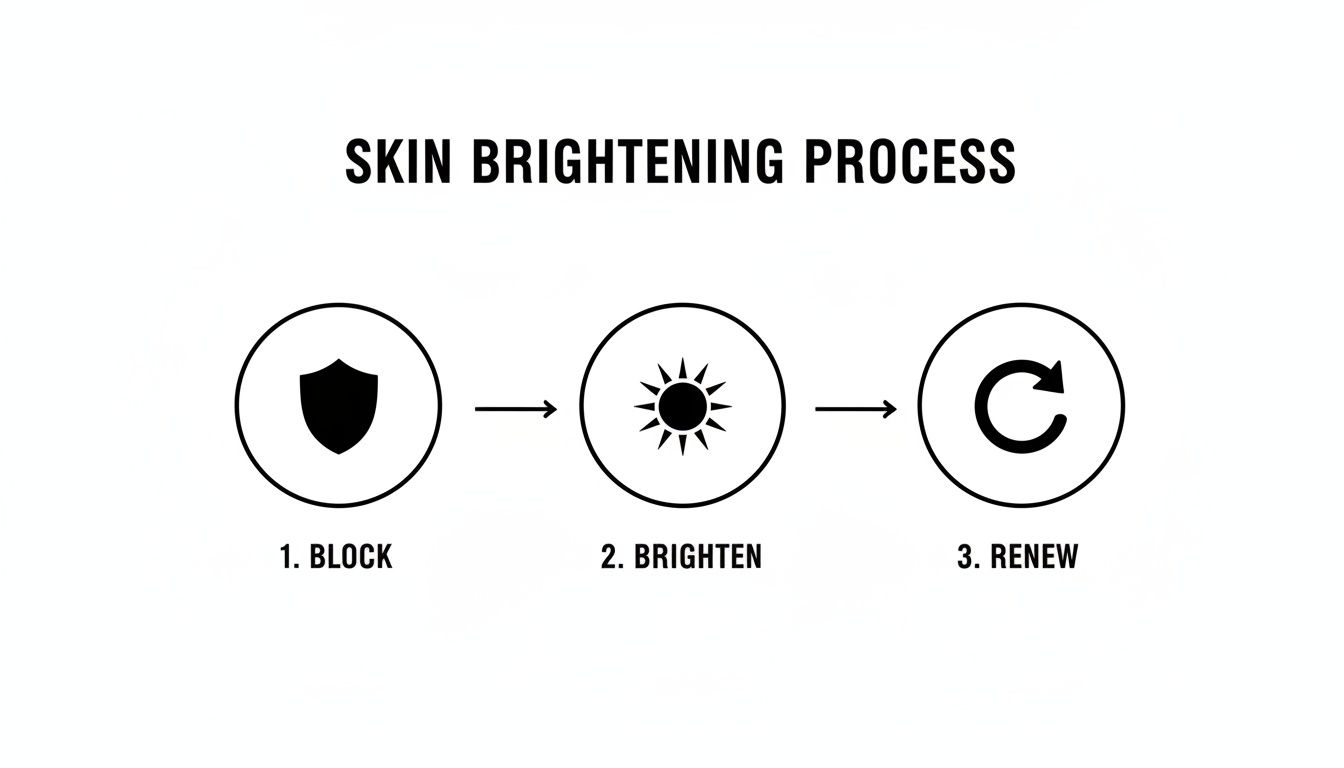
Your Morning Routine for Protection and Prevention
The goal for the AM is simple: shield your skin from UV radiation and environmental free radicals, the main culprits behind dark spots. This part of your routine is absolutely non-negotiable.
Your morning steps should be streamlined and focused entirely on defense.
- Gentle Cleanser: Start your day with a mild cleanser to wash away impurities without stripping your skin of its essential moisture.
- Antioxidant Serum (Vitamin C): This is your daytime hero. A good Vitamin C serum neutralizes the free radicals kicked up by UV rays and pollution, stopping new pigment production before it starts.
- Moisturizer: Lock in hydration with a moisturizer that works for your skin type. Keeping your skin hydrated is key, and you can learn more about the benefits of a hyaluronic acid serum to really boost your skin's moisture barrier.
- Broad-Spectrum Sunscreen (SPF 30+): This is the most critical step of all. Without daily, consistent sun protection, every other effort you make will be for nothing. Apply it generously as the very last step before any makeup.
Key Takeaway: Sunscreen isn't just for the beach. UVA rays, a major contributor to aging and pigmentation, cut right through clouds and windows. Making SPF 30+ a daily habit is the single most important thing you can do in the fight against hyperpigmentation.
Your Evening Routine for Treatment and Repair
Nighttime is when your skin naturally switches into repair mode. This makes it the perfect opportunity to bring in the heavy hitters—your powerful, targeted treatments. Your PM routine is all about correcting existing spots and encouraging cell turnover to bring fresh, even-toned skin to the surface.
Here’s a simple framework for a powerhouse evening routine.
- Double Cleanse: Always start by melting away makeup, sunscreen, and grime with an oil-based cleanser. Follow it up with your regular water-based cleanser to get your skin completely clean, ensuring your treatment products can penetrate properly.
- Exfoliating Toner or Treatment (Optional): Two or three times a week, use a chemical exfoliant like an AHA (glycolic or lactic acid). This will help slough off the dead, pigmented cells sitting on the surface.
- Targeted Treatment Serum: Now for your workhorse ingredient. Apply a pea-sized amount of your chosen active, whether it's a retinoid or Atelier Silente's Dark Spot Serum, to go after discoloration at the source.
- Moisturizer: Finish with a solid, nourishing moisturizer. This is crucial for supporting your skin barrier, which can take a hit from strong actives. It helps minimize irritation and keeps your skin healthy and resilient.
By splitting your routine this way, you create a powerful system. You spend the day defending your skin from the triggers that create dark spots, and the night actively repairing and correcting the discoloration that’s already there. This consistent, dual-action strategy is the foundation for getting—and keeping—a clear, radiant complexion.
Supporting Your Skin Health from the Inside Out

While the right topical treatments are absolutely fundamental, achieving truly radiant skin is about more than just what you put on its surface. The most effective strategies for dark spots almost always include a wellness approach that builds clarity from within.
Think of it this way: if your skin is a plant, your body is the soil. For that plant to truly flourish, the soil has to be rich in nutrients.
This inside-out approach is gaining serious momentum. The fight against pigmentation is reshaping how we view skincare, with the skin rejuvenation market expected to climb from US$2.0 billion in 2026 to US$3.5 billion by 2033. This growth, highlighted in a Persistence Market Research report, shows a clear global shift toward tackling UV damage and pollution from every possible angle.
Ultimately, your lifestyle has a direct impact on your skin's ability to repair itself and fend off the triggers behind hyperpigmentation. When you focus on your internal health, you create the perfect environment for your topical products to work their magic.
Fueling Your Skin with an Antioxidant-Rich Diet
One of the most powerful tools you have for an even complexion is what’s on your plate. Foods packed with antioxidants act like your body's internal defense force, helping to neutralize the free radical damage that can lead to dark spots.
Try weaving these skin-loving foods into your meals:
- Berries and Citrus Fruits: These are brimming with Vitamin C, a powerhouse antioxidant that not only protects the skin but also plays a key role in brightening your overall complexion.
- Leafy Greens: Think spinach and kale. They're loaded with antioxidants like lutein and zeaxanthin, which help shield your skin from daily environmental stressors.
- Healthy Fats: Foods like avocados, nuts, and seeds deliver Vitamin E. It works in tandem with Vitamin C to protect skin cells and fortify your moisture barrier.
A nutrient-dense diet doesn't just support your overall health—it directly gives your skin the building blocks it needs to stay resilient, bright, and even-toned. It’s one of the best proactive steps you can take to prevent future discoloration.
The Impact of Stress and Sleep on Skin Clarity
It's no secret that chronic stress is a major trigger for inflammation, which can easily lead to post-inflammatory hyperpigmentation. When you’re stressed, your body pumps out cortisol. This hormone can throw your skin's natural balance and healing processes completely out of whack, making you far more vulnerable to dark spots after a breakout or irritation.
On the flip side, quality sleep is when your skin’s repair cycle kicks into high gear. During deep sleep, your body sends more blood flow to the skin, helping it rebuild collagen and repair damage from the day. Just aiming for 7-9 hours of quality sleep each night can dramatically enhance the results you see from your skincare routine.
To truly support your skin from all angles, it's also worth considering how your internal systems—like your gut—influence your complexion. You can check out our guide on the best supplements for gut health to explore this connection further.
By managing stress, prioritizing sleep, and eating well, you build a powerful foundation for a clear, even complexion that truly glows from the inside out.
Your Questions on Dark Spots Answered
Even with the perfect products and a consistent routine, questions will always pop up on the journey to clearer skin. Tackling hyperpigmentation is all about patience, and it's completely normal to wonder if you're doing everything right.
Think of this section as your go-to guide for troubleshooting your routine and setting your expectations. We've compiled the most common questions we hear about timelines, product pairings, and when to call in the pros to give you clear, straightforward answers.
How Long Does It Realistically Take to Fade Dark Spots?
This is easily the most asked question, and the answer is all about managing expectations. Fading dark spots is a marathon, not a sprint. The timeline really depends on how deep the pigment is and what caused it in the first place.
For those newer, more superficial marks—like the reddish-brown spots a recent breakout left behind (post-inflammatory hyperpigmentation)—you could see a real difference in just 4 to 8 weeks with a dedicated routine. These spots are closer to the skin’s surface, so they tend to respond faster to ingredients that boost cell turnover.
But for deeper, more stubborn sun spots or melasma that have been there for years, patience is everything. It can often take 6 to 12 months, sometimes even longer, to see significant fading.
Key Insight: Consistency is the single most important part of the puzzle. Using your treatments every day—and, most importantly, wearing a broad-spectrum sunscreen—is what will drive real progress and stop existing spots from getting darker, which would undo all your hard work.
Can I Use Vitamin C and Retinol Together in My Routine?
Great question. Vitamin C and retinoids are both heavy hitters when it comes to hyperpigmentation. But while they're both powerhouses, it's usually best not to apply them at the exact same time. Doing so can overwhelm your skin and lead to irritation.
The smartest and safest approach is to split them up, using one in the morning and one at night. This lets each ingredient do its job without getting in the other's way.
- Morning (AM): This is the time for your Vitamin C serum. Think of it as your skin's daytime bodyguard. As an antioxidant, it shields your skin from the free radical damage caused by UV rays and pollution, which helps prevent new spots from ever forming.
- Evening (PM): Use your retinol or retinoid at night. These ingredients can make your skin a bit more sun-sensitive, so it’s best to use them when you're out of the sun. Plus, your skin is already in its natural repair mode at night, making it the perfect time for retinol to get to work speeding up cell turnover.
By separating them, you get the full protective power of Vitamin C during the day and the full corrective benefits of retinol at night. It's a complete 24-hour strategy for brighter, more even skin.
Are There Ingredients to Avoid for Sensitive Skin?
Yes, absolutely. While potent active ingredients are exciting, they aren't a one-size-fits-all solution. If you have sensitive or reactive skin, you'll want to be careful with certain ingredients to avoid redness and irritation—which, ironically, can lead to even more dark spots.
It's a good idea to steer clear of high concentrations of some actives. For instance, strong retinoids like tretinoin or high-strength glycolic acid can be too much, especially when you're just starting.
The good news? There are plenty of amazing, gentler alternatives that still get the job done.
- Milder AHAs: Instead of glycolic acid, look for mandelic acid or lactic acid. Their molecules are larger, so they penetrate the skin more slowly and are far less likely to cause irritation.
- Retinoid Alternatives: Consider bakuchiol, a plant-based ingredient that delivers similar skin-renewing results to retinol but is much gentler on the skin.
- Azelaic Acid: This is a fantastic choice for sensitive skin. It not only helps fade dark spots but also has anti-inflammatory properties to soothe redness and calm irritation.
Pro Tip: Always patch-test a new ingredient on a small, hidden patch of skin (like behind your ear) for 24-48 hours before using it on your face. When you do start, introduce it slowly, just 2-3 times per week, to let your skin get used to it.
When Should I Consider Seeing a Dermatologist?
Over-the-counter skincare can do wonders, but sometimes you need to call in a professional. Knowing when to see an expert can save you time, money, and a lot of frustration.
It’s time to book an appointment with a board-certified dermatologist if you find yourself in one of these situations:
- You've Hit a Plateau: You've been diligent with a good over-the-counter routine for 3-6 months but aren't seeing the results you want.
- A Spot Changes: If any spot changes in size, shape, or color, or if it starts to itch or bleed, see a doctor right away to rule out skin cancer.
- You Suspect Melasma: This type of hyperpigmentation is notoriously tricky and often tied to hormones. It usually requires prescription-strength treatments you can't get over the counter.
A dermatologist can offer more advanced options for those stubborn cases, including:
- Prescription Topicals: Stronger retinoids like tretinoin or higher-strength hydroquinone.
- Chemical Peels: In-office peels use a much higher concentration of acids to exfoliate the skin more deeply than at-home versions can.
- Laser Therapy: Treatments like Intense Pulsed Light (IPL) or Fraxel can target pigment deep within the skin to break it up.
Seeing a professional isn't a sign of failure—it's a proactive step toward getting the most effective and safest treatment for your skin.
Ready to build a routine that delivers visible results? At Atelier Silente, we've curated a collection of targeted skincare and wellness products to support your journey to clear, radiant skin. Start with our powerful Dark Spot Serum to begin fading discoloration and restoring your natural glow.
Shop the collection and elevate your routine at Atelier Silente


